Exploring Sustainability and Eco-Consciousness Through the Lens of Fashion
Sara Idacavage, who is a fashion historian, archivist and educator, has students in her fashion and sustainability special topics class list out words they associate with slow and fast fashion. Through in-class discussions, field trips and academic scholarship, Idacavage focuses on teaching her students what she wishes she knew at their age about the fashion industry’s contributions to climate change and social injustice.
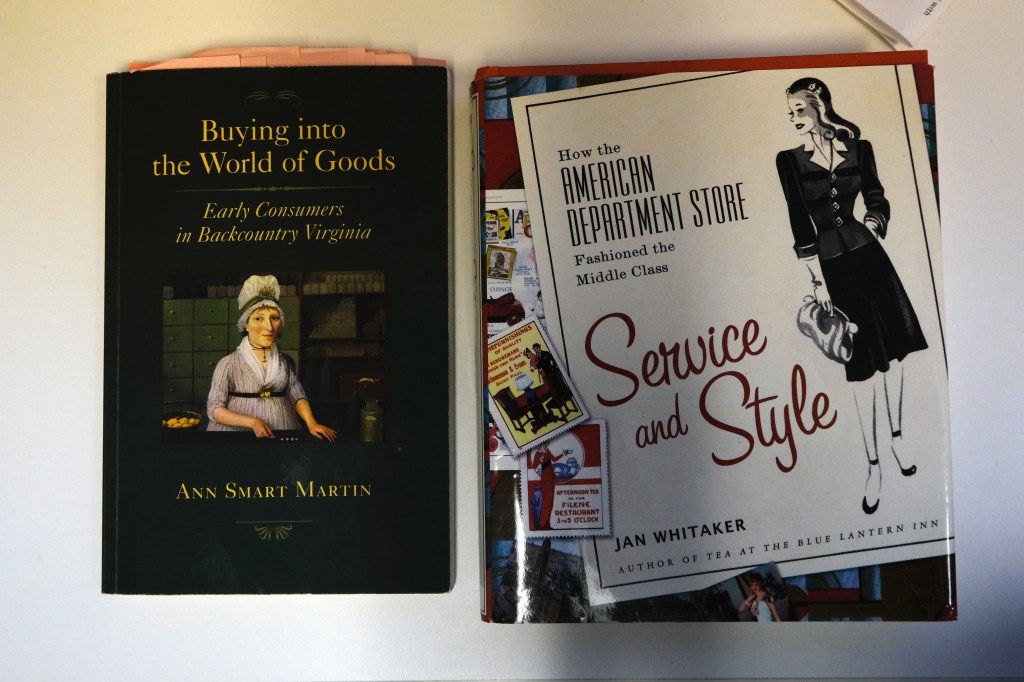
(Photo/Skyli Alvarez)“Buying into the World of Goods” and “Service and Style: How the American Department Store Fashioned the Middle Class” are two books Idacavage utilizes in her class lessons. They are centered around applying historical knowledge to fashion sustainability in a modern context and in students’ daily lives.
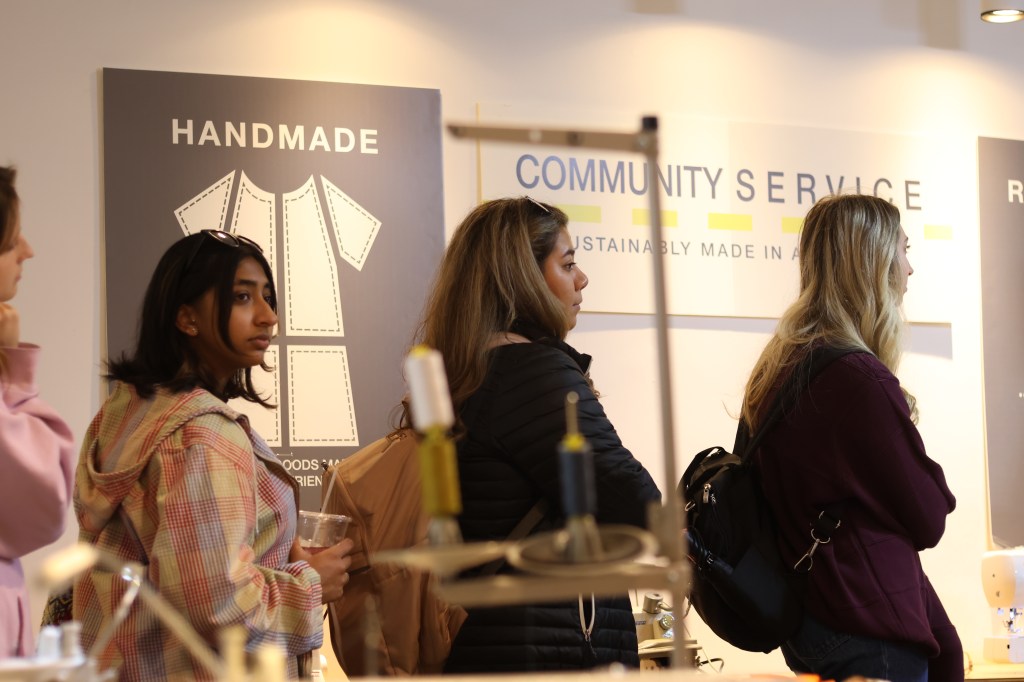
(Photo/Skyli Alvarez)During a class field trip to Community, Idacavage and her students listen to Sanni Baumgärtner, who is an entrepreneur, speak on Friday, Feb. 17, 2023. Prior to the trip, Idacavage’s students learned about the origins of fast fashion and impacts of online shopping on the environment.
(Photo/Skyli Alvarez)Baumgärtner shows Community’s waffle top shirt, which is made from upcycled cotton, to Idacavage’s students on Friday, Feb. 17, 2023. Baumgärtner opened Community in 2010, and to combat fast fashion and its rapid production cycles, the store reuses garment patterns for several years at a time.
(Photo/Skyli Alvarez)Idacavage’s students listen to Baumgärtner and Haley Allen, a graduate student and Community seamstress, explain Community’s eco-conscious efforts on Friday, Feb. 17, 2023. The store aims to produce what it refers to as negative waste, using excess textile scraps to create small items like scrunchies or details on garments.
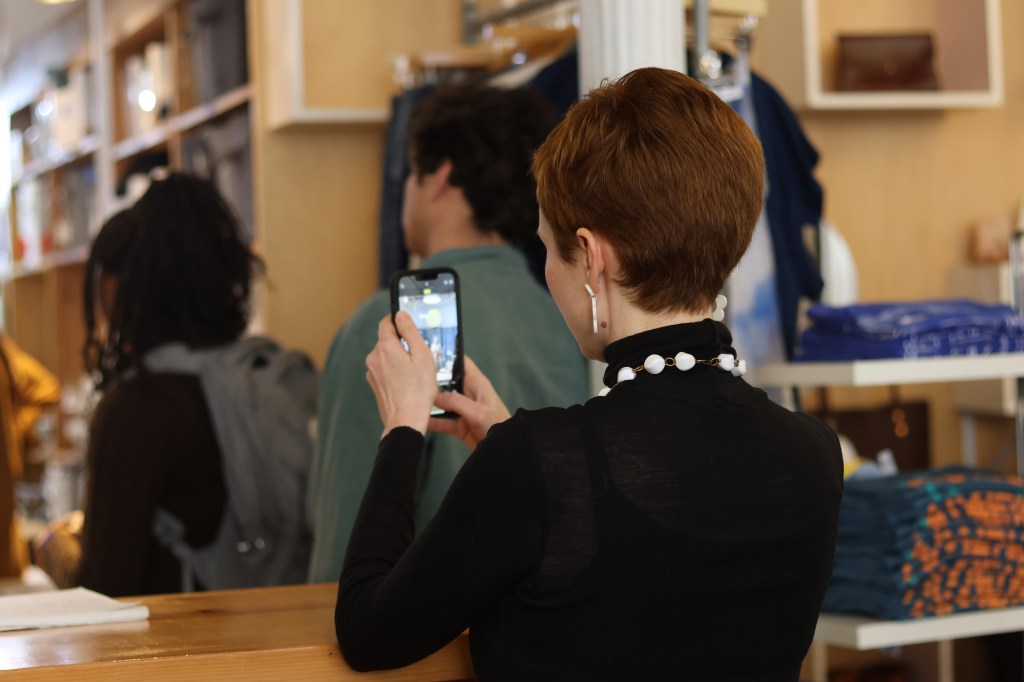
(Photo/Skyli Alvarez)Idacavage takes a photo of her students listening to Baumgärtner speak on Friday, Feb. 17, 2023. Idacavage occasionally shares her class activities on social media such as Instagram, which, in the early 2010s, allowed her to first begin learning more about eco-consciousness.
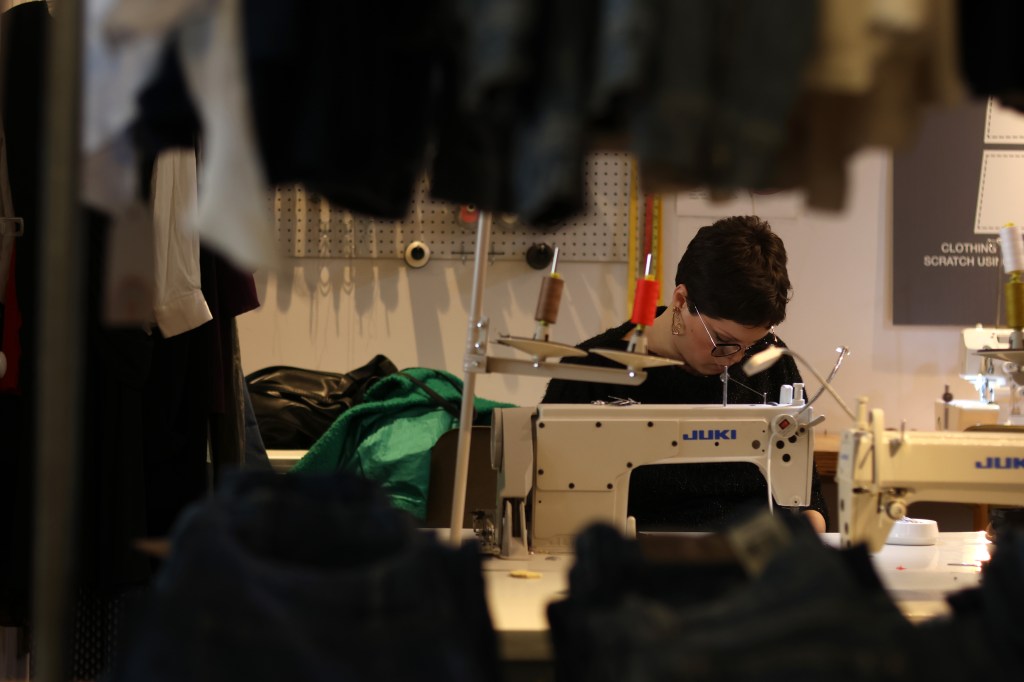
(Photo/Skyli Alvarez)While Baumgärtner talks to Idacavage’s students and reflects what they have learned in class, Allen works on alterations on Friday, Feb. 17, 2023. Allen explains how Community offers a variety of custom services, from adjusting the size of clothes to upcycling vintage or discarded garments for customers.
(Photo/Skyli Alvarez)Young boys work in a textile mill in Macon, Georgia, on Jan. 19, 1909. Idacavage’s students looked at Lewis Hine’s photographs of textile workers to understand unethical production practices that, despite heavily contrasting those of Community, still exist across the globe. (Photo/Lewis Hine, Library of Congress, Prints and Photographs Division, National Child Labor Committee Collection, LC-DIG-nclc-01581, https://lccn.loc.gov/2018674998)Idacavage watches her students interact with Baumgärtner in Community on Friday, Feb. 17, 2023. One of her students tells Baumgärtner that the store’s ethos aligns with what the class has been discussing.
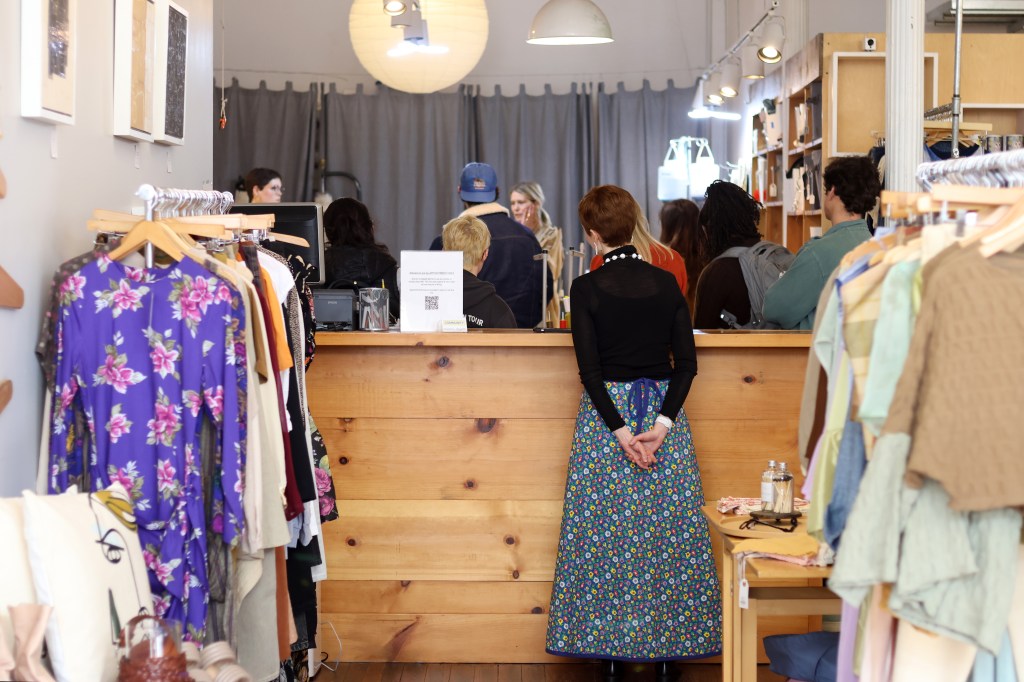
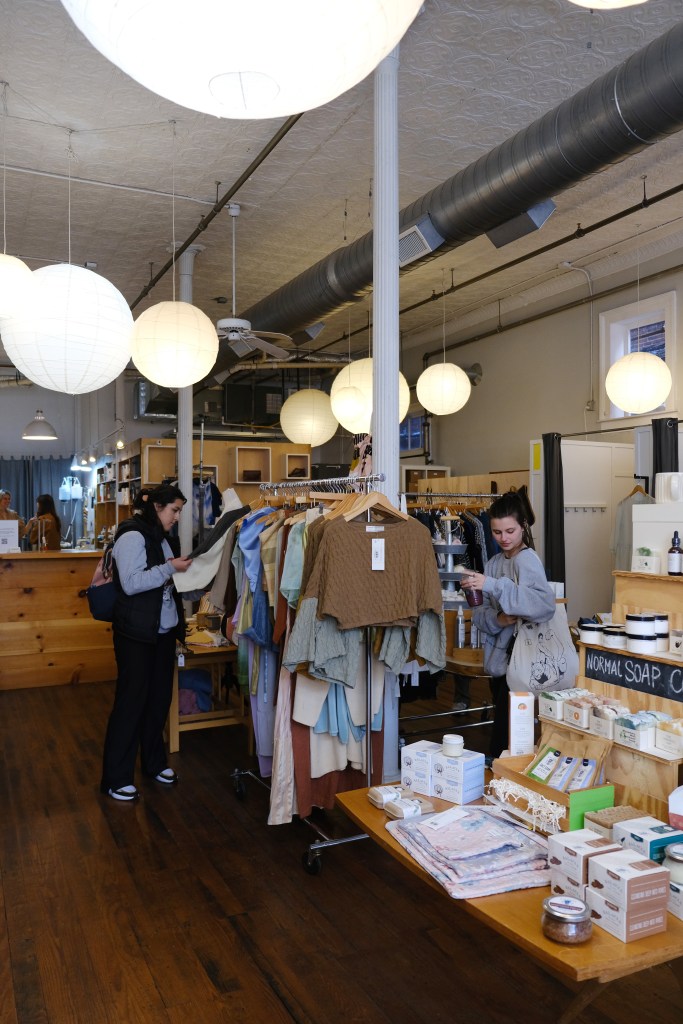
(Photo/Skyli Alvarez)After asking Baumgärtner questions about Community’s sustainable practices, Idacavage’s students shop on Friday, Feb. 17, 2023. The field trip shows her students how nearby businesses and individuals are actively working against unsustainable fashion practices.
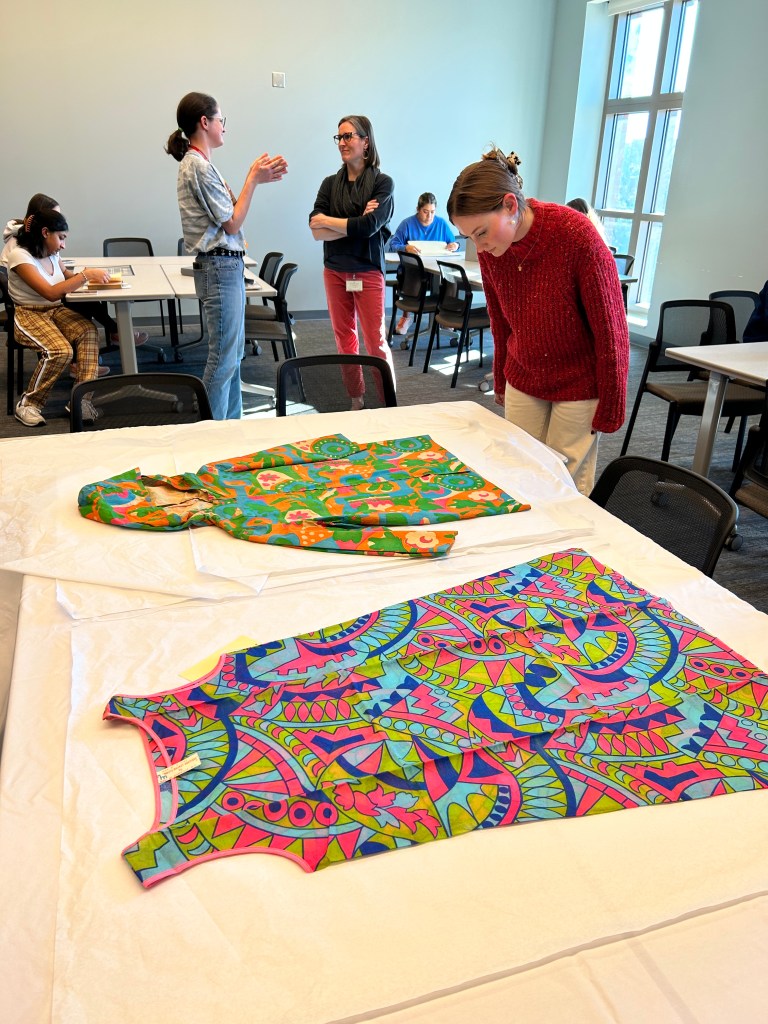
(Photo/Skyli Alvarez)Idacavage and her students look at vintage garments at the Richard B. Russell Special Collections Building on Monday, Feb. 6, 2023. By observing and touching historical garments, Idacavage encourages students to rethink their perceptions of slow versus fast fashion, especially in comparison to Community’s upcycled clothes.
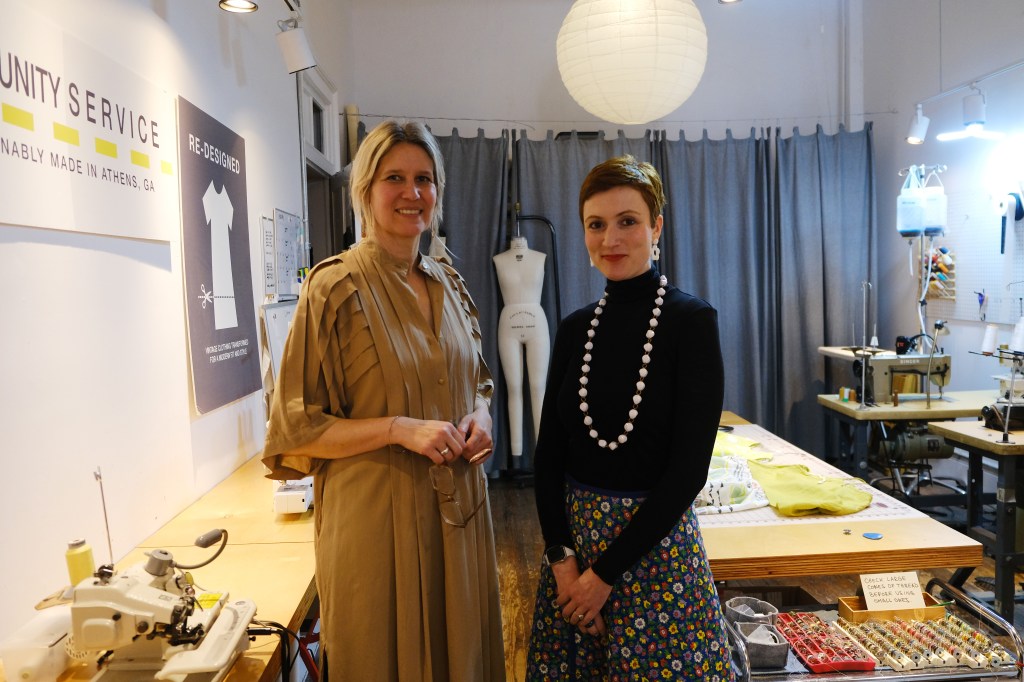
(Photo/Sara Idacavage)Baumgärtner and Idacavage pose for a photo in Community on Friday, Feb. 17, 2023. Idacavage hopes this field trip and others provide her students with opportunities to experientially learn about concepts taught in the classroom.
(Photo/Skyli Alvarez)




 Skyli Alvarez