Move over deadstock, the fashion girls and aesthetes are excavating something much older and stranger.
In this reported op-ed, editorial assistant Skyli Alvarez proposes a rising interest in antique clothing comes in reaction to overconsumption by way of vintage shopping.
It had been an unhurried Sunday afternoon of antique malls and estate sales, and at last we’d made it to the final house: a tiny cottage at the end of an unpaved road. Eager to escape studying for the school week ahead, my college friend and I passed through the home’s many rooms and cabinets full of ceramic ware and holiday decor for sale. As we pushed open the bedroom door, a flood of sunlight spilled through the windows, catching on a row of antique linen tunics, bloomers, and slip dresses draped along the curtain rod. They were all in near-pristine condition, and I felt as if I’d just discovered a secret treasure left waiting for us.
Secondhand shopping may be nothing new, but to say the past few years have seen an explosion of vintage is an understatement. From online curators to IRL pop-ups, resale has grown by 550% since 2018, according to a March 2025 report from Capital One Shopping Research, and over the year prior to the data’s release, roughly a third of the clothing purchased in the United States was secondhand. Brands have been introducing re-commerce, by way of rereleases of legacy designs and resale programs such as Zara’s Pre-Owned and Madewell’s Preloved. In a post-Y2K-crazed landscape, oversaturated with a loop of “vintage-inspired” garb, Shein disguised as deadstock, and overconsumption from thrifting hauls, what comes after the vintage boom? A shift is underway, towards items you’ll never find through any algorithm or infinite scroll. It’s new — or old, depending on how you see it — and it’s in the shape of antique clothing.
“Once I realized that ‘vintage’ wasn’t the end of the road, [I saw] there was this whole world of garments predating the 1940s that could be styled in a modern context,” stylist Madison Minton, 24, tells Teen Vogue. While vintage refers to clothing 15 years and older — from the 1930s to the 2000s — an item is considered antique once it has reached 100 years. Though Minton had spent her childhood frequenting thrift shops, it wasn’t until she entered her 20s that she started venturing beyond the confines of the former term. Through countless visits to local flea markets, she’s expanded her wardrobe to encompass everything from late-1920s flocked dresses to a growing collection of 1800s corset covers she likes to pair with denim. “That feeling of wearing something from the past changed my perception on fashion as a whole,” Minton continues, and with the antique, the sentiment only deepened.
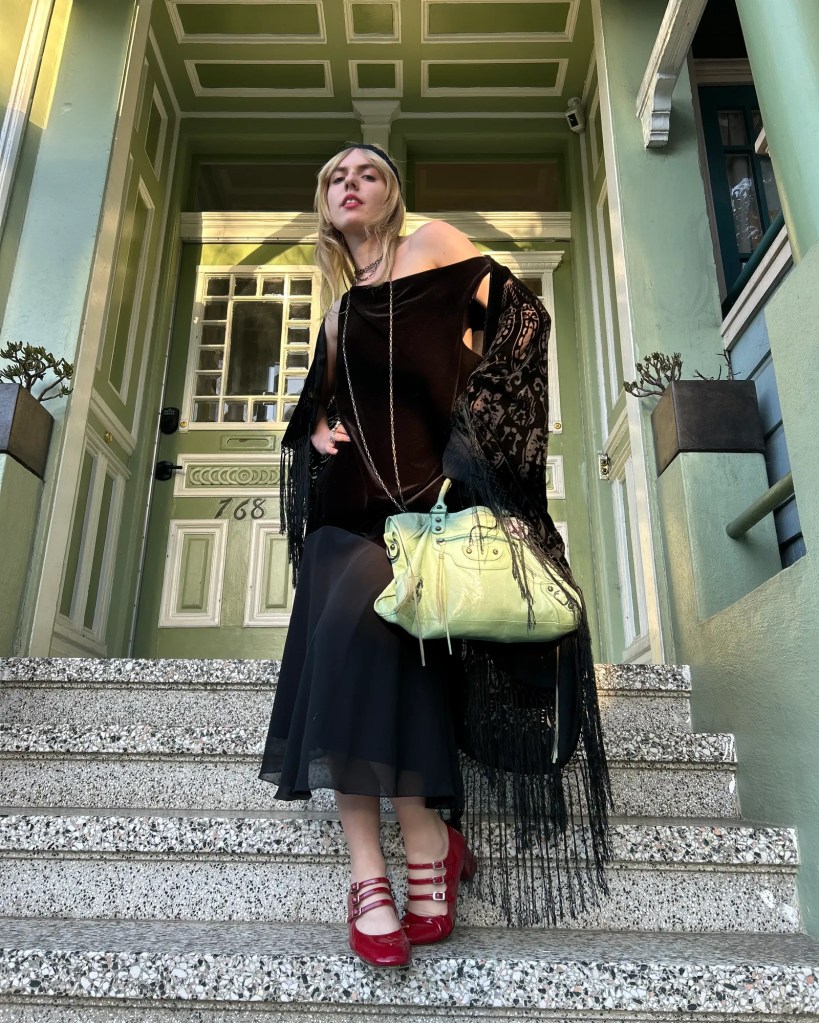
Part of the appeal of such pieces lies in their scarcity. Unlike your typical ‘90s or ‘00s Goodwill finds, there is, unsurprisingly, only so much pre-1930s clothing still in circulation. For the average shopper, these garments are quite difficult to buy in bulk, making them resistant both to instant gratification and overconsumption disguised as a thrift shopping haul. An old Edwardian top on Facebook Marketplace, a 1920s cloche hat at a flea market: it takes digging, negotiating, and post-hunt hand sanitizer, but the payoff and satisfaction of slowed-down shopping lasts lifetimes.
Persistence holds value and warrants a fundamental shift in how the buyer thinks of a purchase: not as a one-time occasion but an experience with build-up, followed by lots of tending. Like personal style, finding antiques does not happen overnight (unless you get especially lucky, which in that case, good for you) as many have been tucked away in armoires as family heirlooms or folded beneath layers of clothes in roadside antique malls across the country. “Antiques aren’t inherently accessible…It takes patience to sift through today’s overwhelming consumer landscape, and often, the willingness to learn how to sew, mend, and properly care for fragile textiles,” Minton notes.
There’s a sort of quest for authenticity that underlies the vintage-crazed’s and archiveheads’ motives, followed by that sense of accomplishment for finding something seemingly one-of-a-kind. When it’s around 100 years old, it feels foreign, almost alien in a way no contemporary fast fashion or 25-year-old vintage clothing could evoke. “People want the real deal. You may not be able to wear antiques every day, but they have an embedded story in them, which I think many are looking for these days,” adds Kacie Lambert, 33, who owns the Chicago boutique Everything. More a gallery than your typical store, Everything houses just that: an array of artist-made, upcycled, and antique garments like opera pieces and turn-of-the-century slips. Lambert recalls observing the shopping mall boom as a child and just how important it was for stores to physically appeal to their audiences, an element of shopping lost to e-commerce. To Lambert, antique pop-ups and flea markets — in all their chaos and hustling — feed that in-person experience so often lacking in the mainstream today.
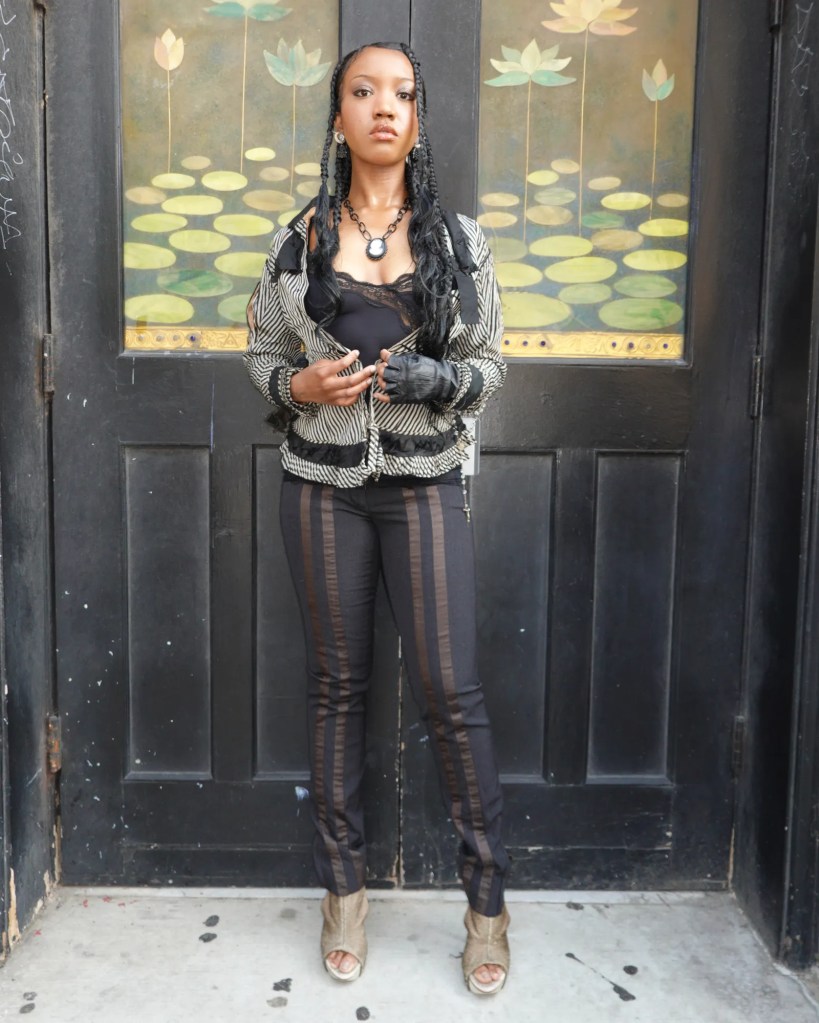
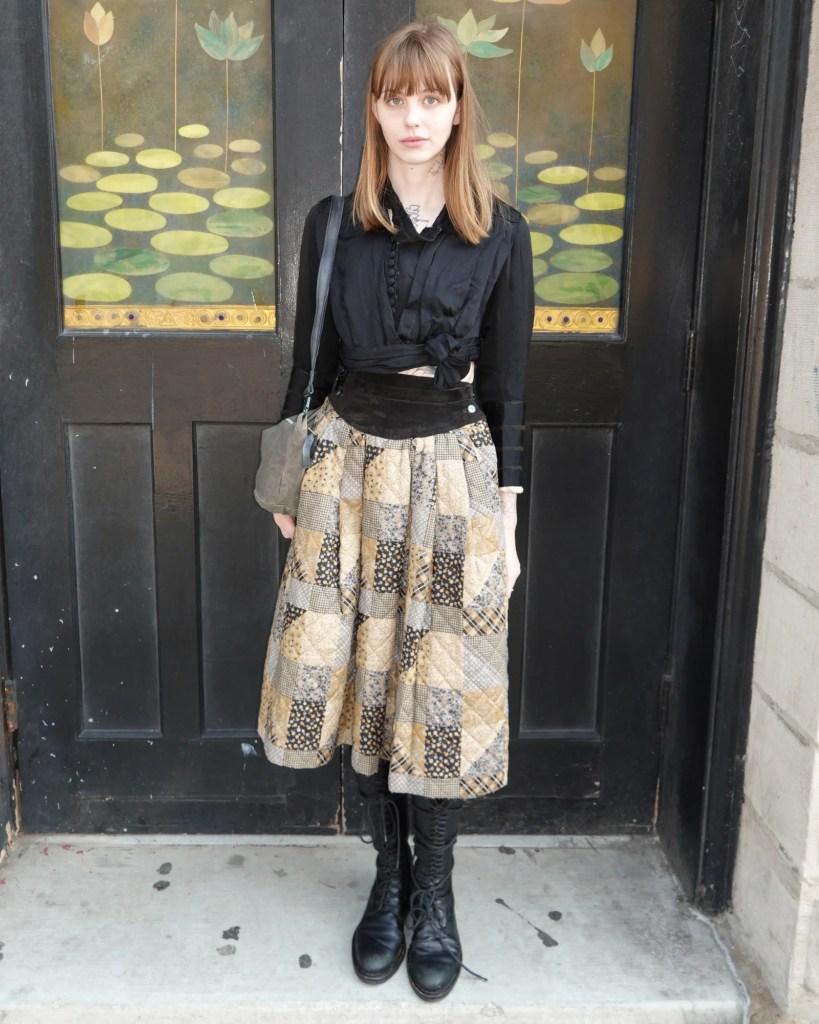
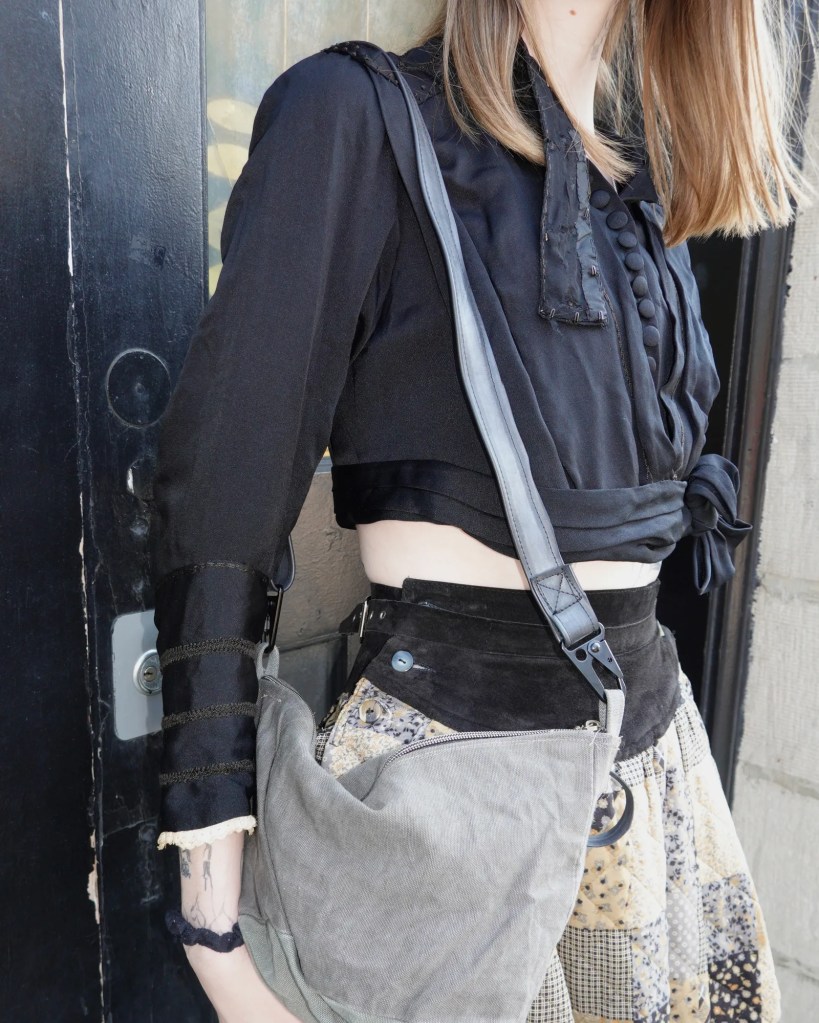
Echoing Lambert, vintage dealer Sofia Wallis, 19, explains, “the reason we love something distressed or beaten-up is because it’s so clear it was loved by somebody. You can’t replicate that except through experience.” Based in Montauk, Wallis manages two secondhand brands: Farmer’s Daughter, which specializes in pre-1940s garments and accessories, as well as Jaded Vintage, focusing on your more typical vintage from the 1970s-onward. She tells me her parents first met at a vintage store, a fitting fact for a young person whose life centers on all things preloved.
Though it may be tempting today to discard a garment when it tears or unravels at the seams, nestled within many of the century-old items Wallis has found throughout the years are restitches and mends. “If you look at these old, Victorian cottons, a lot of them have their original mends but are still in such good shape. Their owners washed and took care of these pieces,” she says of human touch so evident in old garments. To some, frayed hems and added stitches may seem undesirable, but to antique shoppers, they’re traces of human touch and the hand that held these items in a past life. They’re a testament to their many lives and bring the soul of the clothing alive — that intangible we all hope to achieve through our belongings.
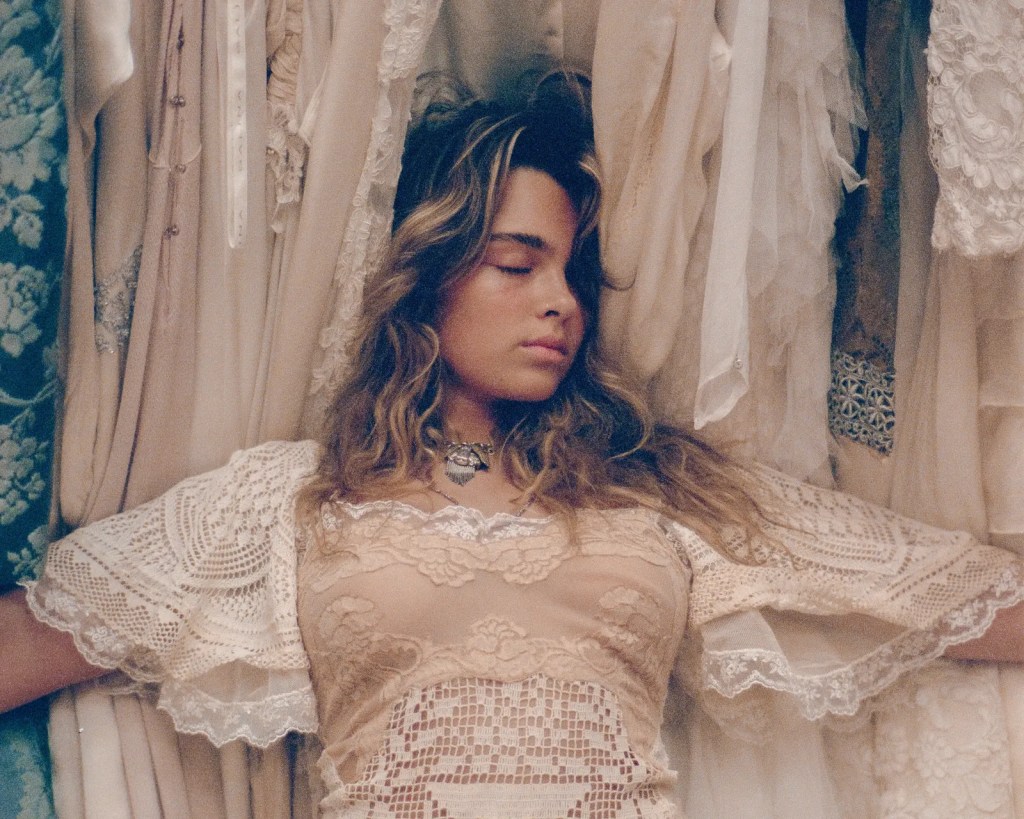
And the joy lies not only in the pure thrill of the hunt, but in the game of dress-up that follows. “I don’t think it’s fun to style things how they should be, but to play around with them,” Wallis explains, referring to the many times she’s paired 1980s-era garments with ‘20s and ‘30s accessories; high-necked Victorian blouses and bodices with trousers; delicate lace fingerless gloves underneath a sweatshirt; antique jewelry as headpieces. Minton, too, speaks of this mixing of eras by way of platform boots, 1920s shift dresses, and 19th-century lockets. Meanwhile, Lambert recalls a recent shoot for Everything where her stylist fit old Anna Bolena opera jackets (which still have original cast member names intact) backwards, a simple switch up that felt quite refreshing.
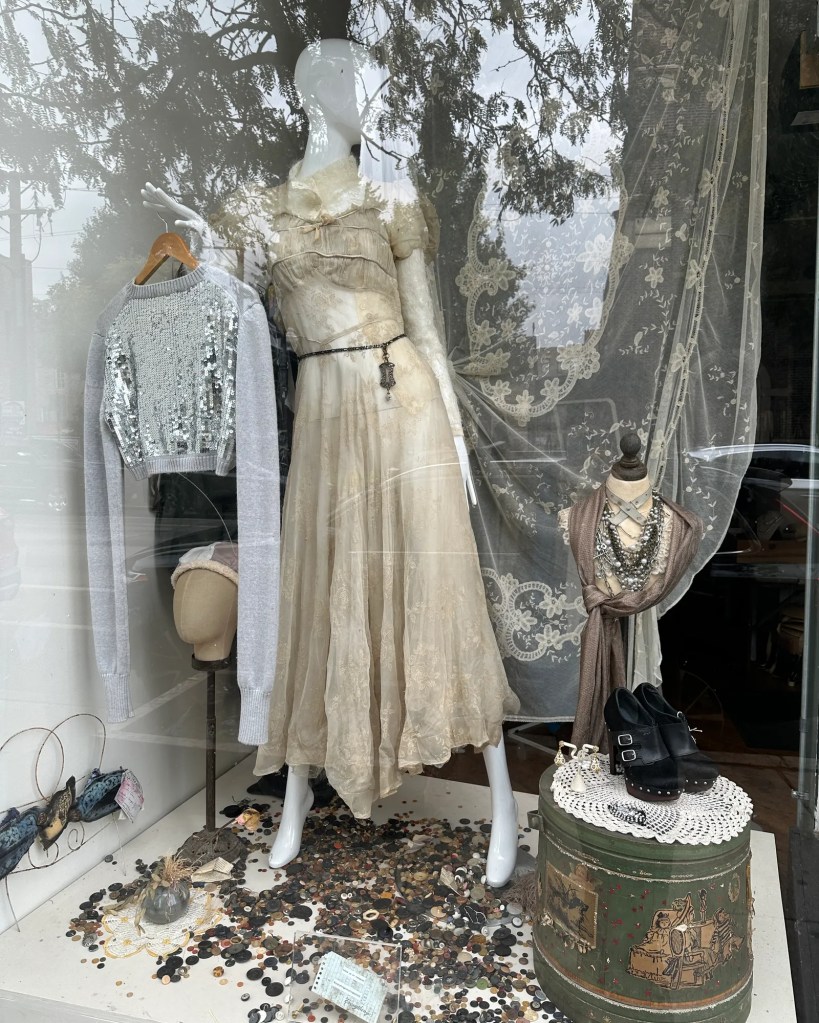
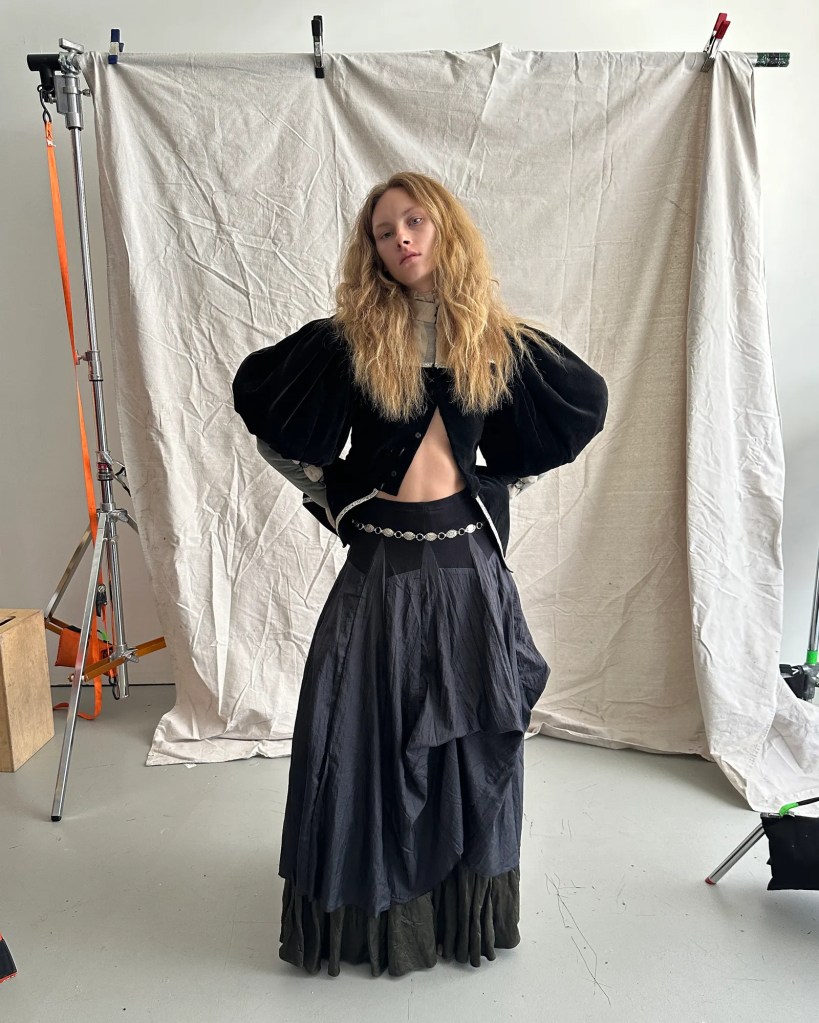
To some, it’s a sport, to others, a challenge, and the more rules broken, the better. In a fashion landscape perpetually aging itself and yesterday’s clothes into irrelevancy, it may feel like we’re teetering at the end of history, running out of trends and cores to include in our style rolodex. However, carefully exhuming long-forgotten silhouettes can add to an ever-growing catalogue of decades and styles one can mix and match, a puzzle whose outcome is wholly dependent upon the player. “Knowing what story you’re telling with your outfit is key. I don’t think there’s a way I can say, ‘this is how you style this [piece],’” Wallis admits. “It’s more a feeling.” With intuition, reimagining old pieces beyond their original contexts and eras modernizes and makes them the wearer’s own. Perhaps the ultimate form of newness takes shape as continual reinvention and interpretation of a long-ago past — not a facsimile of it, but the real thing turned on its head, existing outside of trend and time.
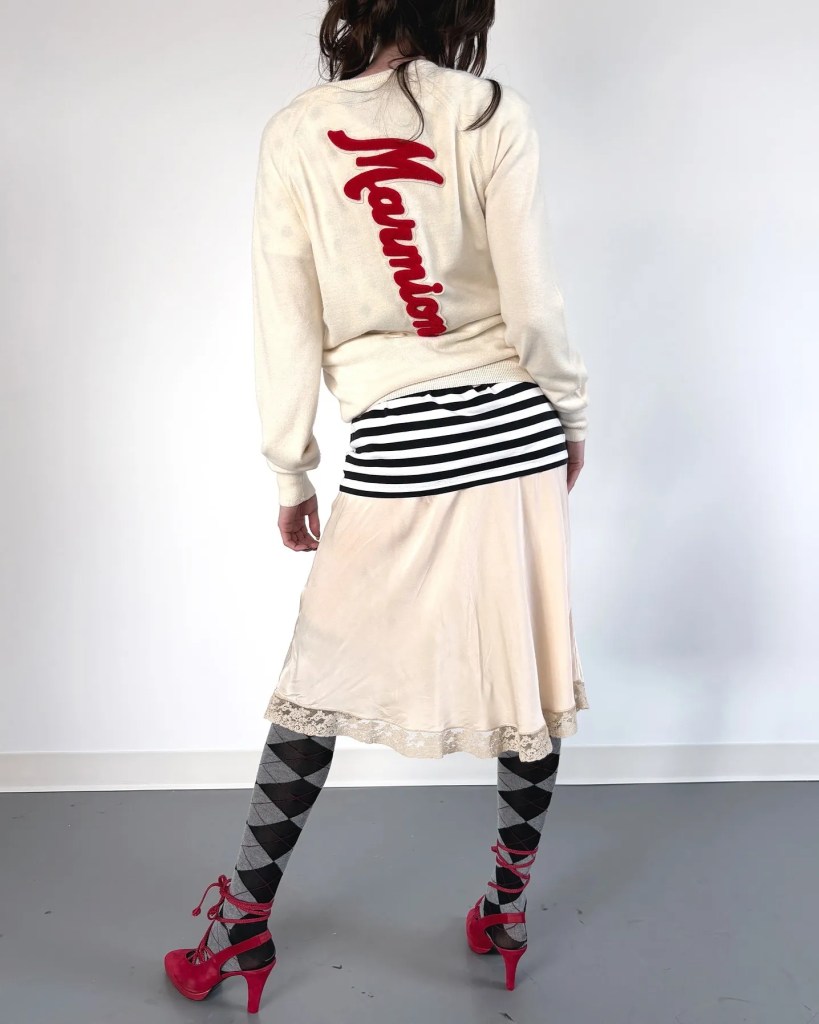
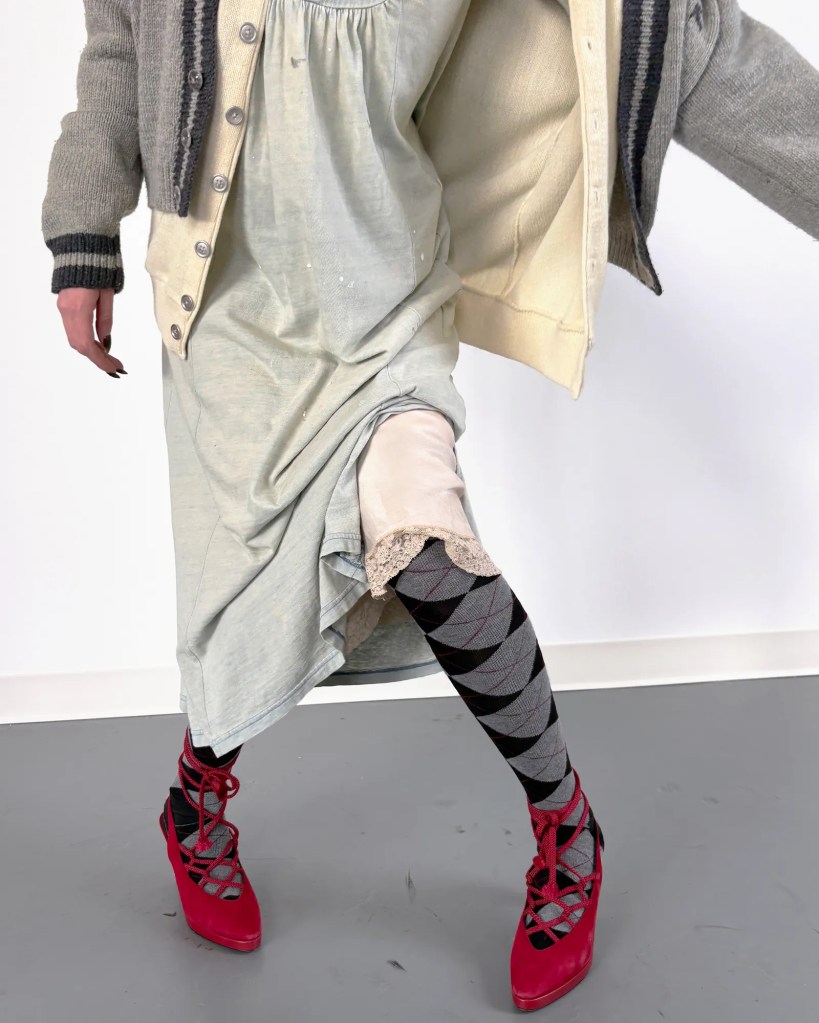
As my friend and I drove along the dirt road, we were fully prepared to leave the estate sale empty-handed and were stunned to walk away with anything but. It was my first time having to research how to care for garments; the so-called pantaloons and slips weren’t just polyester tees I could toss into the washing machine, praying they’d retain their fit. I wondered how many hands had held and washed them before mine. Did their first owner ever think they’d be outlived by their clothing, which was now being paired with roughed-up biker boots and a thrifted military jacket?
In an age of aesthetic sterility, clean girls, and AI uncanniness, the unkempt and oftentimes imperfect element of human touch intrinsic to antique clothes may be a remedy for the times. “I think the beauty of antique clothing is that it teaches patience both in sourcing and in styling,” Minton says. “You can’t always find what you’re looking for right away, but when you do, it feels like fate.” Some dream of fame and riches, but for others, the thrill of the hunt is more than enough.
 Skyli Alvarez